TOBSL Part 2 #1, pp 53‐58 October 21, 2012 (From Tory and Elizabeth)
“Blessed are the pure in heart for they will see God.” A pure heart is the simple heart of a child, who does not know about good and evil, the heart of Adam before the fall, the heart in which the will of Jesus rules instead of one’s own conscience…. A pure heart is pure of good and evil; it belongs entirely and undivided to Christ; it looks only to him, who goes on ahead (Bonhoeffer, Discipleship p. 107).
Thursday, November 8, 2012


Wednesday, November 7, 2012
Lust versus love
Eve saw that the tree’s fruit was good for food, a delight to the eyes, and desirous to make one wise. Likewise, our culture tends to receive lust as something good for their bodily appetites, delighting to see another’s nakedness, and something to boast about in their hearts at the least, if not to others. In terms of the inner desires, human beings desire to see what has not been given to them by God in the lust of the eyes. In the lust of the flesh they want to experience what has not been given as a gift to their bodies. And pride of life shows forth when they want to tell others about it, sharing in unholy communication. But they disregard how that act will affect the other person’s well-being and their relationships now and in the future.
Friday, November 2, 2012
Some Holiday Excursion Suggestions in DC
I have enjoyed
gardens and gardening for many years. In fact, gardening has probably been my favorite
hobby since I began raising children and staying home and homeschooling them (17 years). But I also enjoy art museums, like the Chrysler Museum of Art in Norfolk (beautiful architecture and collection of glass, especially Tiffany), so I’ve trucked the kids to a
fair number of those too over the years. Recently, my husband and I visited the Portrait Gallery and the National Gallery of Art, but in the past we've liked the Hirshhorn Museum
and Sculpture Garden (more modern works), the Freer
Gallery of Art and the Arthur Sackler Galleries (great ceramics) and the Phillips Collection (modern painters, plus others).
Be the boundary
I own a lot of individual books, but very few series from one author, only two in fact: the Personality Plus books by Florence and Marita Littauer and the Boundaries series by Cloud and Townsend. (Marita, I recently discovered, was actually another ally of mine in politics and I never put it together that she was the daughter of Florence until afterwards—a small world our God has!)
Wednesday, October 31, 2012
A great post-Sandy prayer and practice list
Here's a good prayer and action list from a former DC ally and friend of mine, Dr. Calvin Beisner, who is a former pastor-- here.
Friend, foe or fiend
In this season of John Paul II’s Theology of the Body, we are dealing with our sinful actions so I thought to consider our reception of truth that hurts. The Lord can reveal our sin to us through our spirits, the Word, friends and enemies. If both friends and foes can wound us, how can we spiritually know the difference between whether the wounding is coming from a friend or foe? Both enemies and friends can occasionally be very intent upon showing us our faults, sometimes gently and sometimes not so gently. They can both be very intent upon our correction! Is it important to know whether they are friend or foe? Sometimes I’ve heard teaching saying that “conviction is from God and condemnation is from the Devil” so if you feel “condemned,” or maybe just bad, you are to not listen to this voice. But I think this is wrong.
Monday, October 29, 2012
OT Themes
Okay, so here’s some of the themes we’ve been seeing in our
OT study so far. (At least I have!)
Sunday, October 28, 2012
Love the sinner, love the sin
Christians like to
say, “love the sinner, hate the sin,” but as I see it, this is not the
attitude of Jesus or the desert monks of the early Church.
Friday, October 26, 2012
Why I left politics
After people hear about my experience in politics in a very cool job with very cool people doing very cool work they usually ask why I left. I tell them this. (This does relate to our Scripture study, I promise.)
Thursday, October 25, 2012
Fearless, reckless love
Make no mistake, however. Christian ascesis is not only, or even especially
about moderation, self-control, wisdom.
It is the folly of those who in Christ fling themselves into the furnace of the spirit,
of those who have something in common with fire. Olivier Clement
I started on the issue of fear in my last post and I thought it might be helpful to someone if I continued on the subject of fear a bit. (Btw, Marshall liked some of these ideas of mine! :) )
Tuesday, October 23, 2012
The lust versus fear continuum
This week our ToB topic was on JPII’s discussion on the lustful intent of the eyes. But I guess I see this as only one side of the issue. I’ve never struggled with lust, but I have had trouble with fear which can create a disconnect between our minds and our bodies.
Monday, October 22, 2012
One flesh for better and worse
In Theology of the Body we are attempting to understand our faith within the metaphor of marriage and relationships. In a recent post I wrote on how the Law is not meant to give us a reputation as the Pharisees sometimes treated it. Instead, we learn to let people sometimes think ill of us, as Jesus did. Within the marriage analogy, we also learn that becoming one flesh with our spouse can both build up and sometimes also break down “our reputations.”
Friday, October 19, 2012
What intercession looks like
Kill my people? Kill me, Esther effectively said, but this isn’t because the Jews so deserved to be saved (Esther 8:3). The Jews were in exile because of their sins. Likewise, Christians need saving but not because we deserve it more than others. The Church too is ugly. It’s full of self-serving, judgmental, greedy people like me. We can’t see in front of our own noses to care for those around us. We are hypocrites talking about how important marriage is, all the while going behind our spouses’ backs to “get our wants met” in other ways and hurting others in the process.
Saturday, October 13, 2012
The Law--Not a Reputation
Sometimes you hear people say, “I’ve never broken the Ten Commandments,” implying (even if it were true) that the commandments are a measure of righteousness. The scribes and Pharisees certainly used them in this way. How well you kept the rules showed how holy you supposedly were: this built up their reputations, which they highly prized. Jesus said to them, “you love the places of honor…” (Luke 11:43, 14:7, 20:46; Matt 23:6). His disciples also struggled with this, wanting to sit at his right and left hands in the kingdom (Mk 10:37, Matt 20:21).
Wednesday, October 10, 2012
Soul Surfer Questions

I watched the movie Soul Surfer last week on Netflix. Bethany Hamilton does have a powerful testimony in it on how God was able to redeem a terrible event in her life (losing her arm) and use it to cause her to be more compassionate towards those who are disabled.
Sunday, October 7, 2012
The Exodus from the Hotel California
I was baptized by someone in the Rock and Roll Hall of Fame. I don’t know much about his life at all other than he got out of Hollywood, and that he started a new life in Christ with his family as a pastor at a little church in Boulder Colorado which I attended. I loved the heart for Christ that he showed when he led us on Sunday mornings singing even those bad, early 1980 worship songs—I’ve never listened to his pre-Christian music. But he escaped from Hollywood. In the Theology of the Body context, I suppose Egypt reminds me of the song Hotel California, where “prisoners” “can check-out anytime you like, but you can never leave.” You can never leave, that is, until God or His chosen deliverer comes and helps to extricate you.
Thursday, October 4, 2012
Covenant and management practices
Before going into seminary full-time, I worked for three years in an established DC libertarian think tank and I absolutely loved it. We had every life-style, political stripe, sexual expression, age and religion represented, and yet we worked together as friends in an “iron sharpens iron” kind of way. Every voice was heard. Somehow even I was accepted, with my ascetical, conservative, one husband, one religion views.
Tuesday, October 2, 2012
The violence of Lamech

I grew up in
California as a non-Christian and rather gender-blind. Yes, that’s me on the far
left, the only girl with nine boys in the mountaineering club—and I honestly
never thought twice about it. We went cross-country skiing, hiking, rock-climbing, and snow-camping together. They treated me like one of them and some are
still my friends today.
Wednesday, September 26, 2012
The flood and Jesus sweating blood

Monday, September 17, 2012
Genesis 3, Peter, and Hebrews 12 discipline
In Genesis 3 we see sin and its ramifications, but also that our Lord is in the business of healing and hope. There are two types of people’s actions in Genesis three and we can see both in Peter.
Friday, September 14, 2012
Learning from Adam how not to communicate
Friends don’t let friends drive drunk . This old bumper sticker reminds us that as we allow the Word to make us like Himself we will not encourage our friends in ways that lead to death and sometimes we will even have to say something to them. Three of our children have experienced life and death situations with their friends—two they saved from death and one they didn’t.
Tuesday, September 11, 2012
Love tested--Adam, Cain, and Abraham
The Bible’s first use of the word “love” is in Abraham’s journey to offer Isaac (see Thomas L. Brodie, Genesis as Dialogue). This doesn’t seem to make sense, though, if you think of God as love. But the God of love converses with us through the Bible that He himself permeates and if we haven’t found him in our reading of a passage, we’re missing something. Adam failed the test of his love for his wife. Cain failed the test of his love for his brother over himself. But Abraham did not fail the test of his love for God over his son.
Monday, September 10, 2012
The Spirit's loving desire for lifeless chaos in Gen 1:2
When God began to create heaven and earth, and the earth then was welter and waste and darkness over the deep and God’s breath hovering over the waters, God said, “Let there be light.”
(Robert Alter’s translation from Genesis: Translation and Commentary)
If anyone thought that a former-homeschooling, mother of five might read Genesis differently than academic male theologians, you will not be disappointed! From studying Genesis I see four scenarios overlaying each other--Genesis 1, Genesis 3, Deuteronomy 32 and Acts 2--and they all look like Jesus and the Church.
Friday, September 7, 2012
Biblical interpretation
It is the glory of God to conceal things, but the glory of kings is to search things out.
Proverbs 25:2
Thursday, September 6, 2012
The Genesis Jeopardy!

The category is “Man’s Questions for God”
Man’s Questions for $600, Alex.
Answer: God lovingly created man in his own image (1:27).
Question: Why am I here?
Right!
Tuesday, September 4, 2012
Church fathers conversing together on Eden
Irenaeus of Lyons
was a disciple of Polycarp and Polycarp was a disciple of the apostle John of
the New Testament. So Irenaeus is like John the apostle’s grandson and for that reason,
along with the fact that he was recognized as a leader of the church, I find it
interesting to read his writings. As bishop, Irenaeus’s goal was to expound the
faith he received from his teachers. Also, you may notice that John Paul II’s
Theology of the Body teaching appears to be based at points on his work. So here
is the elaboration of Irenaeus’ views on Eden from Justo Gonzales’ church
history textbook The Story of
Christianity:
Monday, September 3, 2012
Honest communication
Now the
serpent was more crafty than any other beast of the field that the LORD God had made. He said to the woman, “Did
God actually say,
‘You shall not eat of any tree in the garden’?” Gen 3:1-5
‘You shall not eat of any tree in the garden’?” Gen 3:1-5
The Scriptures
can bite, but this is only to deliver us from the cancer that consumes us. God
has to get it all out. The Scriptures can be many layered. One verse can have
layers on top of layers of meaning; this is part of its beauty. But Scripture
is never sarcastic, which is a form of lying. The foolish and cynical can be
pitied. And the simple can be innocent. But the sarcastic are liars.
Thursday, August 30, 2012
The story of a friend with multiple personalities
Tim’s excellent sermon Sunday and his comments on the evil accusations often received as a child that go into their personality reminds me of a friend I once had. She was very normal but told me the most unusual life-story I’ve ever heard. She grew up and suffered some sort of abuse as a child. And to cope, her mind split into various personalities. She had around four dominant ones, but around fifteen or so personalities in total. Each of these personalities had their own wardrobe in the closet, their own food likes and dislikes in the fridge, and of course their own types of emotions; and none of them knew what the other did. So if she wasn’t the same personality today as she was yesterday, she didn’t remember what she had done. But Jesus healed her mind and this is how it happened.
Wednesday, August 29, 2012
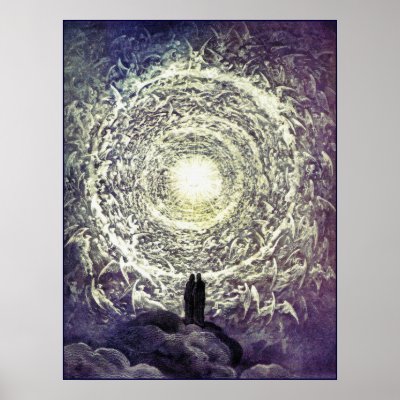
The Vision of Conversation
Monday, August 27, 2012
Becoming a conversational partner with people and the Holy Spirit
I read the scriptures as if they were written by my best friend or brother—sometimes He will have a special message in it for me. The more I really know his character, that is Jesus’, and the more I really want to hear from him, the better the chance is that I’ll hear what it is that my brother is saying to me, if anything. As the writers of the Psalms say they do, I meditate on his writings. I ruminate on them. I consider certain parts in them that keep coming back to me, even in the watches of the night (see Psalms 119). I have a daily ongoing conversation with my brother and so if he has a specific message for me it will usually be along our topics of conversation or certain terms we’ve been using together. I look for their double meaning—one meaning written to someone thousands of years ago and one like it written to me.
Wednesday, August 22, 2012
Towards a more realized eschatology
I was recently talking with two friends from my seminary (Nashotah House), postulants for the priesthood, and I mentioned that of all that I’ve learned in my classes I think that the perspective that most changed for me was my view of eschatology and they agreed. (I know this seems far from our Theology of the Body discussion but it actually does relate—I just have to lay this background first.)
Tuesday, August 21, 2012
Some "together" words in literature
Sometimes there is a move of God’s spirit. God acts. And he acts upon us corporately because he has joined us as a spiritual body (see my previous post here). We’re all in this together. I like how Fyodor Dostoevsky talks of this in The Brothers Karamazov. Here’s a couple quotes:
Friday, August 17, 2012
The New Testament's "together" words
In case some think that I have completely left the reservation in my last post talking about God’s character of “presence-with,” I’m actually working with something that I read that gave me this new perspective. Many of us have heard how the New Testament writers took an obscure Greek word, agape, and used it extensively in the New Testament as a description of God's love. But I recently was amazed to read of a word that they completely coined which doesn’t even occur in classical Greek (from Dennis Kinlaw’s book Preaching by the Spirit, pages 39-40). In fact, they added the prefix sun to many words and used it all over the place! Here’s some examples.
Thursday, August 16, 2012
Prolegomena
”The Greek term prolegomena could be translated as ‘forewords’ – in other words, thing that need to be said before beginning the study of theology itself,” says Alistair McGrath in his Christian Theology: An Introduction. Where we start from—what lens we use—makes a huge difference in how we view God, the Bible, and the world in general. As I was talking about with my son yesterday, everyone has a lens. And it is very helpful to recognize what yours is and decide whether it is a valid one for discovering and discussing God.
Monday, August 13, 2012
Let me count the ways
So we took four of the kids on a family vacation to a condo at Smith Mountain Lake last week to do some waterskiing, tubing, and general chilling. And it was time to return the ski boat to the rental shop before it closed for the night and a storm was coming, so my husband and daughter quickly drove the boat up the lake through the wind and rain to return it, only to discover upon arriving there that the tube we rented that used to be on the back of the boat wasn’t anymore.
Saturday, August 11, 2012
Hewing and hacking with ToB
I love the definition of Gideon’s name: Hewer or Hacker. True he wasn’t the bravest of the judges, but after speaking to the angel he did go and chop down his family’s Asherah pole and altar to Baal (Monday’s lectionary reading, Judges 6:25-40). Afterwards his dad at least stood up for him against the people saying, “If (Baal) is a god, let him contend for himself, because his altar has been pulled down.” Yes, let’s find out if Baal can defend himself.
Monday, July 30, 2012
Pastoral advice for physical self-control applying ToB ideas
I really don’t think either focusing on eating healthy foods or working on building self-mastery by yourself is always edifying; self-centered moralism is inherently flawed. I do think, however, John Paul II’s concepts in his Theology of the Body can provide people deliverance. (I hope this post comes off as I’m intending it—I hope it helps someone.)
Monday, July 16, 2012
Just talk to me
Every type of communication is designed to emphasize something in particular and, therefore, it creates and supports a certain type of person and culture. The old hankie and key chain codes in the homosexual community indicated what they wanted out of another person. Similarly, prostitutes communicate with their clothing the way that they want others to treat them economically. God gives His people His own way of communicating with each other that facilitates our growth towards Him. Even the way the church came up with our universally-accepted closed canon reveals His path of other-centered communication.
Wednesday, July 11, 2012
Mark 5:21-43, Proper 8, Year B
I thought some might be interested in this sermon I was assigned to write for my Practice and Theory of Ministry class at my seminary, Nashotah House Theological Seminary. It incorporates some of the concepts we’ve been learning from John Paul II’s Theology of the Body teachings.
Tuesday, July 10, 2012
Turn towards Love
Almost thirty years ago we had a pastor say something I’ve never forgotten. He said, “The two greatest forces in the world are God and love.” The search for God as seen in the many religions of the world is apparent. Yet the force of love is also clear. Simply turning on the radio to hear the searching is only one of endless examples (like the transcendency of love in this old song here). In Theology of the Body we see that these two forces are one and the same.
Saturday, July 7, 2012
Love requires a third
I
greatly enjoyed hearing Bishop Kallistos of Diocletia speak recently at St.
Mark’s Coptic Church, one of Truro’s local partners in ministry. While there I picked up a CD of a teaching
series he did on The Trinity. We want to
keep this blog going this summer during the time off. Thus, I would like to share with you a few
insights from Bishop Kallistos, since they connect so readily to what we are
learning from the Theology of the Body.
Tuesday, July 3, 2012
Sex, dating, and relationships
One
of the significant things about the Theology of the Body is that it has quite
practical implications for how we live our lives. One of our parishioners, Bill
Barto, has sent in a review of a book by a pair of evangelical pastors that
deals with the topic of dating and relationships. They pick up on some of the same themes as
John Paul II. Here is what Bill has to
say:
Friday, June 29, 2012
The car

One inexpensive daily upgrade to the rental car price and my teenage son and I have found ourselves cruising Florida this week in a black Camaro convertible during my husband’s business trip. And people treat you differently in such a car! Groundskeepers don’t usually wave frantically at me and my ordinary SUV, teenage boys in Chargers don’t want to race me, and I don’t usually get tailed by police cars. These people were “objectifying” me, as it were.
Thursday, June 21, 2012
Amazing knowledge, amazing grace
Perhaps one of the most remarkable and widely misunderstood
words in the modern world is “to know,” or its cousin, “knowledge.” The Latin
word for “knowledge,” scientia, gives
us our word for “science,” a quintessentially modern way of generating a vast
body of “knowledge.” Yet, the way Adam
“knew” Eve in Genesis 4:1 reflects something quite different.
Tuesday, June 19, 2012
A testimonial to a spiritual father (and mother)
Since we were remembering our fathers Sunday, I’d like to testify of my own spiritual birth when I was 15 which was fostered by my uncle Jay and aunt Muriel. This is what I said at my uncle’s memorial service six years ago about how they made possible my life in Christ:
Friday, June 8, 2012
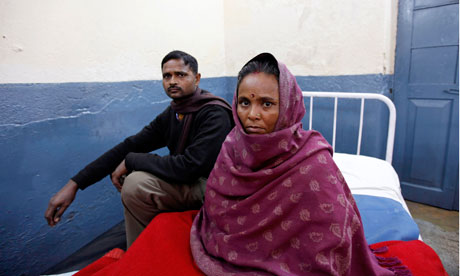
Forced sterilizations in India
Sunday, June 3, 2012
He knew his wife
Based on pages 39-42 from The Theology of the Body in Simple Language
Now Adam knew Eve his wife, and she conceived and bore Cain, saying, “I
have produced a man with the help of the Lord.”
Genesis 4:1, ESV
They become the proud creators of new life. But this new life is created in the community
of human beings and death that is characterized by obsessive desire. Creation
and Fall, p. 145, Bonhoeffer
Sunday, May 27, 2012
Seeing and shame
Based on pages 35-38 from The Theology of the Body in Simple Language
Shame arises only of the knowledge of humankind’s dividedness, of the
world’s dividedness in general and thus also of one’s own dividedness. Shames expresses the fact that we no longer
accept the other as God’s gift but instead are consumed with an obsessive
desire for the other….In the unity of unbroken obedience one human being stands
naked before another, uncovered, revealed in body and in soul, and is not
ashamed. Shame arises in a split-apart
world.
Creation and Fall, p. 101, Bonhoeffer.
Friday, May 25, 2012
Keeping body and soul together
Julie’s recent post on “Neuroscience and ToB” made and excellent point: how we live and relate to one another quite literally
affects the way our brains are wired.
The very cells within our bodies respond to the way we live, and the way
we live in shaped by how our brains are wired.
As the Psalmist says, “I
praise you, for I am fearfully and wonderfully made. Wonderful are your works;
my soul knows it very well..”(Psalm 139:14)
Monday, May 21, 2012
Neuroscience and ToB

Many of you will remember when Dr. Curt Thompson came to Truro on Oct 31, 2010 and gave a Rectors Forum talk and a sermon based on his book "Anatomy of the Soul: Surprising Connections between Neuroscience and Spiritual Practices That Can Transform Your Life and Relationships." Dr. Thompson is a Falls Church based Christian psychiatrist, and here’s how his book is described on his website:
First, at our core, we all are desperate for joy, courage, kindness, and security. We long for these qualities to be displayed in our children, our families, our communities, and ourselves. Second, new discoveries in neuroscience – the study of how our brains function – reveal that our interactions with each other help shape our brains and relationships in ways that either point to the qualities above, or point to negative, harmful qualities. Anatomy of the Soul examines the process of paying close attention to our brains and our relationships—a process that not only strengthens our awareness of their existence, but enhances our ability to become more joyful, courageous, kind and secure as we interact with those around us.
Friday, May 11, 2012
Spirituality

It’s outrageous that some popular, supposedly “spiritual,” devotional books have next to nothing in them about dealings with others. For the apostle Paul, though, his “spiritual life” started with dying daily for others (because there is a resurrection, see 1 Cor 15:31), a life which led him to a transcendent vision from the Lord (2 Cor 12).
Sunday, May 6, 2012
Why love?
Based on pages 31-34 from The Theology of the Body in Simple Language
Freedom lies at the
heart of the gift-giving meaning of the body. (TOBSL p. 31)
To love is to give
everything and to give oneself. –St. Therese of Lisieux
Thursday, May 3, 2012
Marriage
Our eldest and her husband are pastors in Canada. They get approached by Christian young adults and teenagers wondering why they should even get married. Is this our future here in the U.S. or will the Church become a voice for transformation? Christopher West lines out the course we're on to answer their question with something more than what can be basically ineffective rules; our journey through John Paul’s "Theology of the Body" has begun. Here’s the path we’re on:
Sunday, April 29, 2012
“It is very good.”
Based on pages 7-30
from The Theology of the Body in Simple Language
God’s look
sees the world as good, as created – even where it is a fallen world. And because of God’s look, with which God
embraces God’s work and does not let it go, we live. (Creation and Fall, p45).
[M]an, who
is the only creature on earth which God willed for itself, cannot fully find
himself except through a sincere gift of himself. (Vatican II, Gaudium et Spes 24:3)
Tuesday, April 24, 2012
Does Facebook make us lonely?
The Theology of the Body has introduced
us to two complementary themes: original solitude and original unity. Each of us is a unique individual, alone and
distinct from the created world around us.
Yet we were made to be in relationship to God and with one another, as
imaged in the story of our original human parents created as male and
female. Yet while solitude and
relationship with others are essential aspects of our being human, we often
experience these in our broken world as mere loneliness, an especially modern
problem in an era of instant communication.
Monday, April 23, 2012
Learning to give onions
Sunday our Theology of the Body Rector’s Forum continues with “Why Love?,” reading pages 31-34 in Theology of the Body in Simple Language. In the meantime, here’s a chapter and a couple quotes from Doesteyevsky’s The Brothers Karamazov that hopefully may inspire our thinking about life as a gift from God that we, in turn, offer to and receive from others. (Here’s some extra comments on the scene.)
Wednesday, April 18, 2012
My Lord and my God
The scripture readings for the Easter season continue to reinforce the things that we are learning from the Theology of the Body. Our bodies are important to God. He himself took upon himself a body of human flesh. We encounter God—more than just a body—when we “see” Jesus Christ. This is certainly true for the readings we heard this past Sunday.
Tuesday, April 10, 2012
It was as His Flesh: ours
A bit belatedly, let me wish to all of our readers of this blog a most blessed Easter! The resurrection of Jesus—the Word made flesh—is a most important part of the Theology of the Body. He is risen indeed! Allelulia! Jesus’ risen body demonstrates that our bodies are significant eternally to our Father God who loves us. It is a foreshadowing of the resurrection bodies that our Father will one day give us.
Saturday, April 7, 2012
Only the wound is there
As we continue our reflections on Holy Week, we come to the day between Good Friday and Easter Sunday that we often neglect. Yet the Church from ancient times has had much to say about this remarkable Sabbath-Saturday that stands between the full and the empty tomb.
Friday, April 6, 2012
A Friday called Good
Many words have been written about the crucifixion of Jesus. Yet words can never be fully adequate to capture the depths of the mystery of human sin and evil that is so bound up with the mystery of the redemptive love of God in Christ Jesus. I was drawn to a short poem by George Herbert (1593-1633) and need not say more.
Signs and Wonders
My parents and I awoke to the sound of our shepherd barking in our car, which is uncool in the middle of the night in a peaceful Yosemite campground. We looked out to see the moonlit situation: a bear cub was up a tree, our stupid dog was in our tin can of a car barking at the cub, momma bear was at the bottom of the tree, and we were in a tent. It all did work out eventually, but everyone knows—you don’t mess with momma bear.
Thursday, April 5, 2012
A week called Holy
During this special week of the liturgical year—Holy Week—Christians reflect upon the events around Jesus’ passion, crucifixion, and burial. It is not hard to see that what we have learned so far from the Theology of the Body is connected with these seminal events.
Monday, April 2, 2012
March Madness and Living the Christian Life
Tonight Kentucky plays Kansas for the NCAA championship. We lived in Kansas City only about long enough to get our daughter’s high school diploma, an adorable teeny tractor Christmas tree ornament, and go to the weirdest sporting event I’ve ever attended. I didn’t know if KU’s fans were watching a basketball game or The Rocky Horror Picture Show. Strange chants, newspapers up, confetti all over, and they hardly ever sat down. Something also happened and their arms all turned into a supposed wheat field, I think—they were well trained at the slightest event to act in a certain way. Though not a March mad fan myself, it is interesting to compare this to living the Christian life.
Friday, March 30, 2012
Vulnerability

My favorite movie is "His Girl Friday." Cary Grant and Rosalind
Russell, what’s not to love? Grant’s and Russell’s characters are in the newspaper business.
Russell gets the crazy idea that she wants instead a comfortable, quiet
life instead of being a reporter. But Grant has Russell pegged. He
doesn’t force her to be something she is not but he does patiently help her to
see that what she really loves is being a reporter and being with him. Jesus
knew what was in man—our stupidity and wickedness—and yet he still invites us
to the way to life.
Thursday, March 29, 2012
The Threshold of Original Nakedness
And the rib that the Lord God had taken from the man he made into a woman
and brought her to the man. Genesis 2: 22
Therefore a man leaves his father and his mother and clings to his wife,
and they become one flesh.
And the man and his wife were both naked, and were not ashamed. Genesis 2:24-25
Then the eyes of both were opened, and they knew that they were naked. Genesis 3:7
Sunday, March 25, 2012
"Original Nakedness"
Based on pages 23-26 from The Theology of the Body in Simple Language
The community of husband and wife is a community of love that is accepted as given by God and that glorifies and worships God as the Creator. It is therefore the church in its original form. And because it is the church, it is a community bound with an eternal bond.
Creation and Fall, p101. Bonhoeffer
Thursday, March 22, 2012
“I am because we are.”—John Mbiti
We recently have had several posts considering John Paul II’s opening teachings on solitude and unity, pointing out the contrast with our western cultural focus on an excessive individualism. I came across a quite intriguing article by Grant LeMarquand, Professor of Biblical Studies and Mission at Trinity School for Ministry in Ambridge, PA. Prof. LeMarquand has long been interested in African and African Christianity. In fact, he has recently been selected to be the Area Bishop for the Horn of Africa and will serve as an assistant Bishop under Archbishop Mouneer Anis, Primate of the Anglican Province of Jerusalem and the Middle East and Bishop of the Diocese of Egypt. He will be consecrated in Cairo on Ap. 25.
The best compliment
Wednesday, March 21, 2012
Solitude-in-communion
The themes of original solitude and original unity undergird the beginning of John Paul II’s Theology of the Body. Yet the interplay of solitude and unity in Christian life are still important today. Last week the Archbishop of Canterbury highlighted these in a talk he gave while he was in Rome to commemorate the ancient connections between Anglican and Roman Christianity.
Monday, March 19, 2012
True love waits
I think the most important question to ask those considering marriage is this—Why do they love you? Granados and Anderson in Called to Love quotes John Paul in Love and Responsibility (90) saying, “lovers who ‘as soon as sympathy breaks down…feel that love has also come to an end’ were never mature enough for love in the first place” (52-53).
Sunday, March 18, 2012
Rector's forum, March 18, 2012
"Original Purity"
Based on pages 21-22 from The Theology of the Body in Simple Language
The bond is best described in the expression: he now belongs to her, because she belongs to him. They are now no longer without each other; they are one yet two . . . . They have from their origin been one and only in becoming one do they return to their origin.
Creation and Fall (p. 97) - Bonhoeffer
Friday, March 16, 2012
Original unity's reception of love
Therefore a man leaves his father and his mother and clings to his wife,
and they become one flesh. Genesis 2:24
In the last Rector’s Forum we were considering “Original Unity” (notes here). I think as Christians we can somewhat wrap our heads around the idea of giving ourselves to each other as Christ has given himself to us, but sometimes how we receive one another is still obscure. But if we consider that God so loved the world that he gave us His Son, we recognize that people either receive or dismiss that offer of love.
Thursday, March 15, 2012
The Truth was there all along
It is fascinating to notice that God sends His church great teachers who open the Scriptures according to the needs of the times. The Scriptures do not change, but the Bible is such a broad and deep book that though its pages contain the answers to the heresies of each age and for each age, the Lord must send us His disciples to open our eyes to the treasure we had all along in the Word He has given us.
Wednesday, March 14, 2012
Be gentle with the bearers of God's image
A parishioner gave me a link to a news item that is relevant to the Theology of the Body and suggested we post it. It is good for our parishioners to raise topics that strike their interests. Please send your thoughts or links for relevant news items to us by using the email link below the blog title. Please also join our conversation on any post topic by clicking on the orange "comments" link below the post and writing your own comment in the "Post a comment" box.
Genesis 2 retold
The second account of creation seen in Genesis 2 can be seen on many levels. Paul Julienne did a beautiful job of describing Adam’s new self-awareness here. Primarily using the notes from our Rectors Forum on Original Solitude, I see it in one sense it as a coming of age story.
Tuesday, March 13, 2012
Burden Bearers
“Father, forgive them for they know not what they do” (Luke 23:34)
Sunday, March 11, 2012
Rector's Forum, March 11, 2012
"Original Unity"
Based on pages 16-20 from The Theology of the Body in Simple Language
This ultimate belonging to one another is, however, unquestionably associated with human sexuality. Quite plainly sexuality expresses the two complementary sides of the matter: that of being an individual and that of being one with the other. Sexuality is nothing but the ultimate possible realization of belonging to each other. It has here as yet no life of its own detached from this, its purpose.
Creation and Fall, p100, Bonhoeffer
Saturday, March 10, 2012
The word within

I am a scientist by profession with a long-standing interest in the interaction of science and faith. Often I find that the sciences can give us remarkable insights into the nature of the world. Many people think that science and Christian faith are inevitably opposed to one another. But the two can and should interact fruitfully. John Paul II wrote that “each can draw the other into a wider world, a world in which both can flourish.”
Thursday, March 8, 2012
Glorious earth man
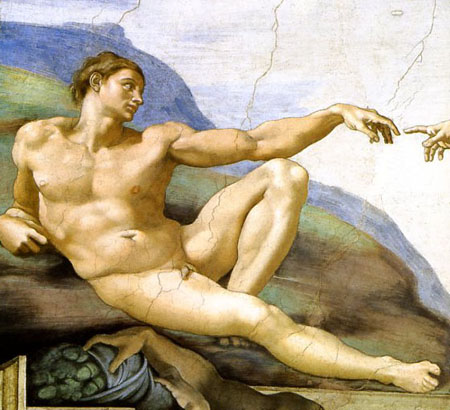
In Dietrich Bonhoeffer’s Creation and Fall, Bonhoeffer talks about God’s formation of man, John Paul’s “original man”:
Wednesday, March 7, 2012
His solitude was not discovered in isolation.
One of Elizabeth’s statements for discussion from March 4 struck me: “His solitude was not discovered in isolation, but in an encounter with the world.” For one, it points out the power of this strange and ancient story to bear truly on the world and humanity. John Paul draws much more meaning out of Genesis than the merely literal.
Monday, March 5, 2012

Sunday, March 4, 2012
Rector's Forum, March 4, 2012
“Original Solitude”
Based on pages 9-15 from The Theology of the Body in Simple Language
One of man's original experiences is the experience of being "alone" (Genesis 2:18), the first observation of all creation that God says is "not good." This solitude is multifaceted and each aspect has a bodily component. Man is alone and utterly unique in relationship to the rest of creation, in relationship to himself as a body/soul complex, and in relationship to God with whom he is uniquely related. We will explore each of these aspects of original solitude.
Friday, March 2, 2012
Good news for the poor
Prompted by Julie’s diversion into the Beatitudes that we have been studying at Truro recently, let us consider the opening verse, Matt. 5:3, “Blessed are the poor in spirit, for theirs is the kingdom of heaven. I have a fascination with words, getting at their inner meaning, their relationship to other words and to the Word made flesh. What is Jesus getting at here?
Thursday, March 1, 2012
In the end …
If beginnings are important to us, endings are even more so. If we are reading a gripping mystery novel, the beginning sets the scene, but we keep on reading now because we want to see how it turns out. The beginning and end are related and shape the story.
Us miserable wretches
I’m taking a small detour from ToB-type stuff. We’re starting a Lenten Sunday sermon series on the Beatitudes, the “happy are those who” statements, so I thought I’d make up a “miserable are we who” list. Have any to add?
Wednesday, February 29, 2012
Glorified humanity
Last year the Lord revealed something to me that changed me: Jesus didn’t “deign” to come and serve us, becoming different than His glory. His glory was best expressed as self-giving love.
Tuesday, February 28, 2012
Your baby
In her great questions for us in the Rectors Forum (which Paul has kindly posted here), Elizabeth Baucum has asked us to reflect on the ways our experiences help us to understand more about God. On February 19th, she quoted TOBSL page five—“All of our subjective experiences correspond to the objective reality that we are created in God’s image.” So, here’s an experience I had today. What experiences have you had?
Saturday, February 25, 2012
In the beginning ...
There is something significant about the beginning of something. Beginnings are full of promise and expectancy. Just think of ordinary things like a new garden, or a new house, or better yet, a new baby. John Paul II starts his whole Theology of the Body by doing just what Jesus did when questioned by skeptical questioners. Jesus went back to the beginning to turn their questions back to God’s original intention with his creation.
Thursday, February 23, 2012
You are not orcs
Here’s the dialogue and a clip from Two Towers:
Merry.
We have just agreed.
Yes?
I have told your names to the Entmoot and we have agreed you are not Orcs.
Well, that's good news.
And what about Saruman? Have you come to a decision about him?
Now, don't be hasty, Master Meriadoc.
Hasty?
Our friends are out there. They need our help. They cannot fight this war on their own.
War? Yes. It affects us all. Tree, root and twig.
But you must understand, young Hobbit it takes a long time to say anything in Old Entish and we never say anything unless it is worth taking a long time to say.
Wednesday, February 22, 2012
Lent is for Baptists too
Lest you think that we are concentrating too much on what our Catholic friends have to say, here is a link, "Lent for Baptists," to an opinion piece in the Associated Baptist Press giving reasons why our Baptist friends might also want to be more serious about Lent. Follow the link to read the article. It gives a brief history of Lent and then asks "Why is Lent relevant for Baptists?"
Comments on Benedict's Lenten sermon
Thanks Paul for the link to Benedict XVI's sermon for Lent 2012 and your thoughts and questions about the topic of love-in-communion. Here’s what I liked from it.
Being brothers and sisters in humanity and, in many cases, also in the faith, should help us to recognize in others a true alter ego, infinitely loved by the Lord. If we cultivate this way of seeing others as our brothers and sisters, solidarity, justice, mercy and compassion will naturally well up in our hearts.
Tuesday, February 21, 2012
Let us be concerned for each other
One of the things we learn by taking the perspective of the Theology of the Body is that human beings are made to be in communion not only with God but with one another, since God is a trinity of persons-in-communion. While marriage is held up as a uniquely powerful icon of that love-in-communion, the call-to-communion extends to all of God's people. Since we are getting ready for Ash Wednesday, I wish to call your attention to Benedict XVI's sermon for Lent 2012. The reason is because it focuses on this theme through the lens of Hebrews 10:24 "Let us be concerned for each other, to stir a response in love and good works."
How lovely is thy dwelling place
Remember this song? We used this song in worship in our small church in the mid 80s and I haven’t heard it since then but it always comes back to me as a comfort. I assume it is from Psalm 84. This song and Psalm 84 speak to me of the Original Man in John Paul II’s Theology of the Body. In his very first talk (p. 131) JP2 teaches on Mt 19:3-8:
Sunday, February 19, 2012
Rector's Forum, Feb. 19, 2012
“Sin and Innocence”
Based on pages 5-8 from The Theology of the Body in Simple Language
Who can speak of these things except in pictures? Pictures after all are not lies; rather they indicate things and enable the underlying meaning to shine through….In complete consistency with the framework of the picture, the story is told how the human being was put into this garden to live in it, and how in the center of the garden stood two trees: one the tree of life and the other the tree of the knowledge of good and evil. The destiny of humankind is now to be decided in relation to these two trees. (Dietrich Bonhoeffer, Creation and Fall, 81).
What does the tree signify in this Genesis 2-3? What two states of humanity are divided by it?
Thursday, February 16, 2012
Discussion questions from the 2/12/12 Rector's Forum
The teaching is taken from pages 1-4 of
The Theology of the Body in Simple Language (TOB/SL) by John Paul II
1. The Rabbis’ question to Jesus—i.e., when is it permissible to divorce?—presupposes that divorce is possible. How does their question reflect a lack of trust in love? How does Jesus’ answer speak to the solidity of love?
2. “A man and woman don’t become one flesh on their own, Christ says—God unites them.” (TOB/SL p. 2). Some view marriage as something individuals do (such as a contract, a promise, or a covenant). How might our understanding of marriage be enlarged if we see marriage as something God does?
3. God joins. Man puts asunder. In what other areas of creation has man (humanity) sought to separate those things that God intends to be united?
Living in communion with one another
This is an email thread among several of us that started Feb. 9. It considers the implications of being called together to live in communion. Our study of the Theology of the Body stimulated some thinking about this matter. A part of the email thread is copied here.
+++++++++++++++ Initial email, Feb. 9, 2012 +++++++++++++++
Dear Friends,
As we continue our explorations of the Theology of the Body, I wish to offer a few thoughts triggered by the readings for this morning.
As Jesus was teaching the mostly skeptical Jews in Jerusalem, we read in John 8:30-32,
As he was saying these things, many believed in him. Then Jesus said to the Jews who had believed in him, "If you continue in my word, you are truly my disciples; and you will know the truth, and the truth will make you free."
These are familiar words. The words from v. 32 (the truth will make you free) are inscribed around the compass rose that is the symbol of the worldwide Anglican communion. Yet there is much that can be learned from these few simple words of Jesus.
Rector's Forum Schedule 2012
Part One: Original Man – What are we made for?
Date subject to revision due to unforeseen interruptions | Theme | Pages in The Theology of the Body in Simple Language |
1-28-12 | Overview | |
2-12-12 | “In the Beginning” | 1-4 |
2-19-12 | Sin and Innocence | 5-8 |
3-4-12 | Original Uniqueness | 9-15 |
3-11-12 | Original Unity | 16-20 |
3-18-12 | Original Purity | 21-22 |
3-25-12 | Original Nakedness | 23-26 |
4-22-12 | Gift of Life and Love | 27-30 |
4-29-12 | Why Love? | 31-34 |
5-6-12 | Seeing and Shame | 35-38 |
5-27-12 | “He knew his wife” | 39-42 |
6-3-12 | Love Cycle | 43-47 |
6-10-13 | Exalted Vision of Man | 48-50 |
Subscribe to:
Posts (Atom)